No matter the magnitude, the impact of changes towards inclusivity could lead to one goal: more acceptance and understanding of what it means to those who are intersex. The possibility for inclusivity exists in countless ways, whether it be a great, revolutionary movement, or a slight shift in the language one uses. This possibility is one that must be explored in order to shine a light on a group of people who are too often left in the dark, often misunderstood and unacknowledged.
It is only right that in order to advocate for acceptance for a group, one must have the knowledge of the people that they are supporting. According to the Intersex Society of North America's "What is Intersex?", intersex is a term used to describe various conditions in which a person is born with reproductive or sexual anatomy that does not fit definitions of “male” or “female”. This understanding is very important, as there is much ignorance surrounding the idea of being intersex. According to Fausto-Sterling, “It would be better for intersexuals and their supporters to turn everyone’s focus away from genitals. Instead, as [Kessler] suggests, one should acknowledge that people come in an even wider assortment of sexual identities and characteristics that mere genitals can distinguish.” (22) With ignorance, there is a tendency to put people into categories. While it is proven that there are more than two sexes, this is not enough to stop the imposition of two sexes. Unfortunately, the idea of two sexes limits gender identity. The image below illustrates people using gender identity to identify themselves, despite the imposition of the two sexes. This image captures how overwhelming it could be to determine a gender identity in a world that likes to categorize and generalize.
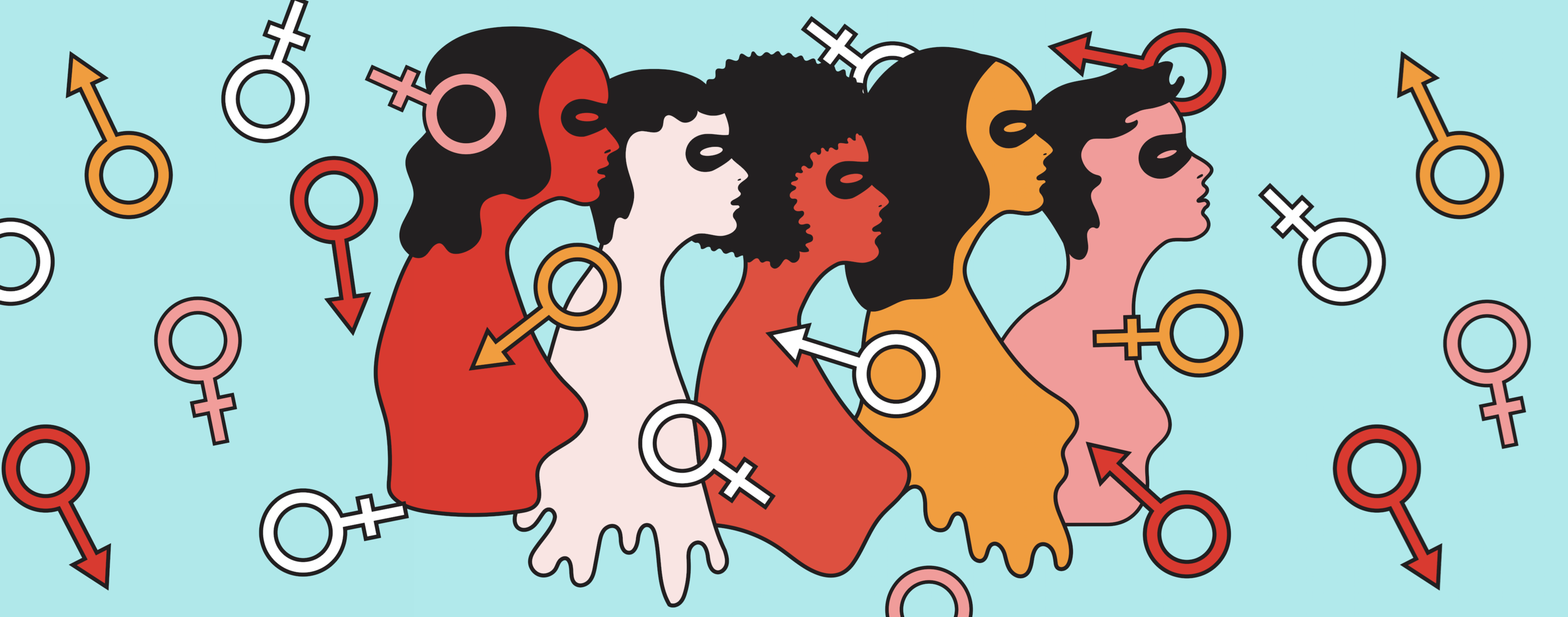
Image by Lydia Ortiz
When one is born intersex, there are medical procedures that are performed in order to assign a sex to the infant, so that the child will have a clear pathway to a gender identity. According to psychologist John Money, raising the child according to the surgically assigned gender would eliminate psychological distress for the child and the parents (Fausto-Sterling 20). The physicians, who are performing the operation, are the ones who make the call when it comes to assigning the gender. Parents are likely to respect the doctor’s wishes, and they will accept the choice that the doctor makes for their child. Since doctors are meant to know what would be best for the health of their child, parents will likely not suggest another option for their child’s identity. There are many factors at play here: not only a hierarchy of power, but also a lack of knowledge on behalf of the parents.
When an intersex baby is born, physicians, more often than not, will be the ones who assign a gender to the baby. This gender is reinforced through surgical procedures, and the parents are meant to raise their child in accordance with the gender that was chosen. Although the doctors may believe they are doing the right thing, they are likely doing more harm than good for their patients.
There are many negative effects that could result from these surgical procedures. Intersex people experience numerous physical struggles after their surgeries, such as: loss of sensation, sexual dysfunction, or limited body abilities (Cohut). These physical conditions are not ones that are easily resolved, since there is limited access to doctors who are willing who work with patients who are intersex.
There are not only negative physical effects, but also negative mental health effects. If someone is in a body in which they do not identify with, then it will likely lead to a deteriorated mental state. They will likely feel trapped, and it will evolve into other mental health problems, such as: depression, PTSD, or suicidal thoughts (Cohut). If the intention of these surgeries is to improve the patient’s overall health and well-being, then they are not as successful as the doctors may hope. The image below illustrates the potential role that doctors play in the life of one who is intersex. This is represented by the doctor’s gloves above the intersex flag.
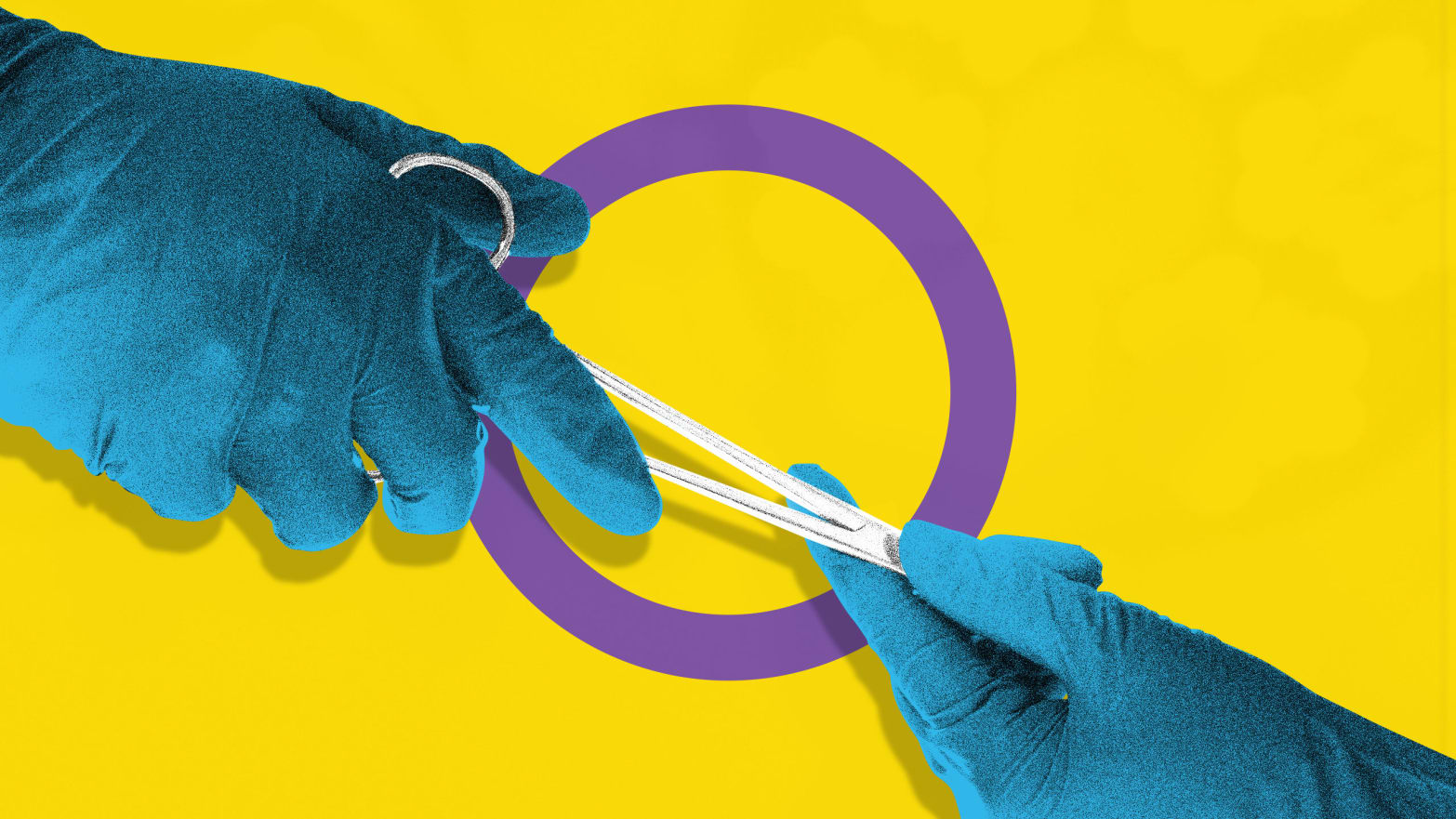
Photo by Elizabeth Brockway/The Daily Beast
Similar to the doctor’s intentions, parents may think that they are doing what’s best for their child. Unfortunately, this is not always the case. With less ignorance about what it means to be intersex, then parents may be able to make the decisions for themselves and do what could be right for their baby. Some ignorance associated comes from the lack of representation of people who identify as intersex. As it currently stands, there is little to no representation for those who are intersex. There are many public role models who represent other members of the LGBTQPAI+ community, which helps promote awareness and invites people who learn more about the way people identify themselves. To learn more about the positive effects on having a role model of the LGBT+ community, there is a study here. The voice of an intersex person telling their story would likely empower others who identify as intersex to use their voice and tell their story. If there were more public role models that could shine a positive light on their identity, then it could go a long way in the inclusion of the intersex community.
If there were more opportunities throughout one’s life to learn about what it means to be intersex and what choices exist for those who identify as intersex, then there would likely be less limitations for intersex people. This could be changed by educating both children and adults.
A major way to introduce change is adjustments to the curriculum for elementary schools or high schools could help introduce the topic of intersex identity to children. Adding this topic to a health class for elementary schools and high schools could prove to be effective in educating people about what it means to be intersex. These children will then grow into informed adults. These informed adults will then be able to better educate their children, or others, when the time is right.
A possibility for representing those who are intersex is including intersex characters in movies or television shows for children, teens, or young adults. This strategy is not new. This strategy is effective because forms of media help introduce topics in a way that can be not only entertaining, but also informative. Characters in forms of media can act as a role model, and if there is representation of a certain group, it can lead to the empowerment of many who feel underrepresented. There are many examples of shows that represent members of the LGBTQ+ community, which can be found here. This introduction could be the spark that invites acceptance in those who are willing to learn, as it is being presented in a way that could be entertaining.
With people being more informed, there is less possibility for excluding those who are intersex. Greater representation will lead to more awareness for the treatment of intersex people. This change in representation will empower those who have been left in the dark for too long. There needs to be a change in the way we address what it means to be intersex- and it starts with one small step towards the greater goal: inclusivity.
References
Bird, Jason D.P., et al. “The Impact of Role Models on Health Outcomes for Lesbian, Gay, Bisexual, and Transgender Youth.” Journal of Adolescent Health, vol. 50, no. 4, 2012, pp. 353–357., doi:10.1016/j.jadohealth.2011.08.006.
Cohut, Maria. “Why Is Healthcare Not a Friendly Place for Intersex Individuals?” Medical News Today, MediLexicon International, 1 July 2020, www.medicalnewstoday.com/articles/the-intersex-gap-in-research-and-healthcare.
The Daily Beast, 2019, www.thedailybeast.com/i-wasnt-ready-for-the-intersex-surgery-i-had-as-a-child.
Fausto-Sterling, Anne. “The Five Sexes, Revisited.” The Sciences, vol. 40, no. 4, July 2000, pp. 18–23., doi:10.1002/j.2326-1951.2000.tb03504.x.
Necessary, Terra, and Raffy Ermac. “16 Cartoon Shows with Awesome LGBTQ+ Characters.” Pride, 10 Aug. 2020, www.pride.com/geek/2020/8/10/16-cartoon-shows-awesome-lgbtq-characters#media-gallery-media-1.
Ortiz, Lydia. Lydia Ortiz, www.lydiaortiz.com.
“What Is Intersex?” Intersex Society of North America, isna.org/faq/what_is_intersex/.



No comments:
Post a Comment