 |
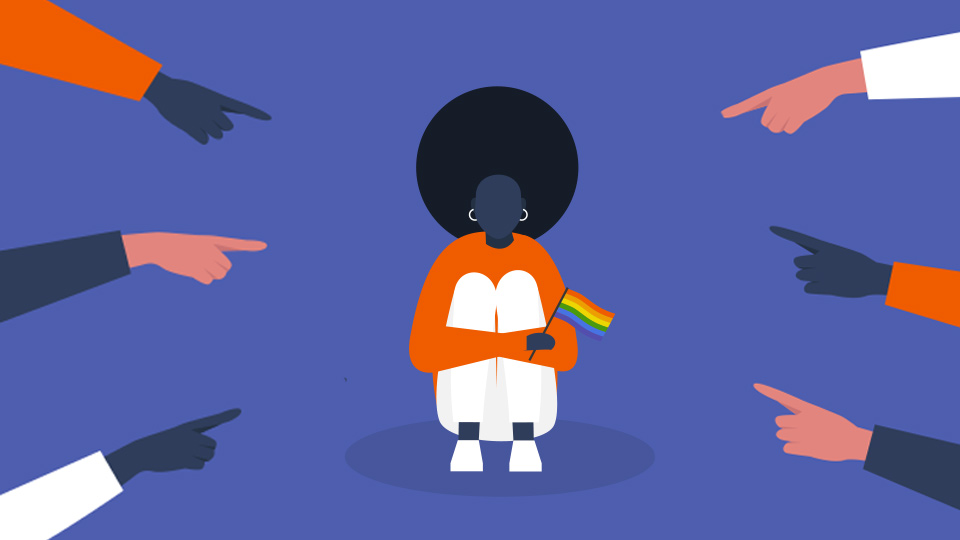
| (Loughborough University) Labeling can be unhelpful in the new generations of LGBTQ+ community. |
Has labeling crossed the line?
I will begin by emphasizing my own uncertainty on this topic. Labeling in the LGBTQ+ community has a rich history of empowerment and reclamation, but looking towards future generations of exploratory people, I wonder if labeling will become outdated. Based on my impressions of the LGBTQ+ community, myself, my friends, and my family, my assessment is: labeling today does more harm than it does good. To begin this argument, it is important to break down some context about labeling. The LGBTQ+ community has been in a cycle of under-the-radar names, slurs, reclaimed labels, and new terms and Leslie Feinburg defined some of the outdated labels of the late 90s, writing, “But much of the language of old gay life reflects gay gender outlaws: bulldaggers, nellies, butches, queens, diesel dykes, Marys, he-shes, she-males, drag kings, drag queens” (In the Spirit of Stonewall 97). Some of these terms are still in circulation in the LGBTQ+ community today, but most of these are outdated and even unheard of by the new Gen Z community. Before homosexuality was even in relative mainstream media, authors illuded to their oppressed sexualities in their writing to express their feelings with hopes of avoiding persecution, “language was a code.” The 21st century has brought quick progression in labeling in the LGBTQ+ community with the age of the internet. There becomes a new community
online to connect people all over the world, and anonymity online likely plays a large role in this fast development. People are free to explore their identities without fear of judgment or being recognized by friends and family.And while the safety of the internet is helpful in labeling, it is also helpful for public representation of people in the LGBTQ+ community.One celebrity on my radar recently has been Lil Nas X, a rapper who has truly fought stereotypes of rappers of color and has found huge success in the entertainment industry.The internet has made room for labels to connect and evolve very quickly.
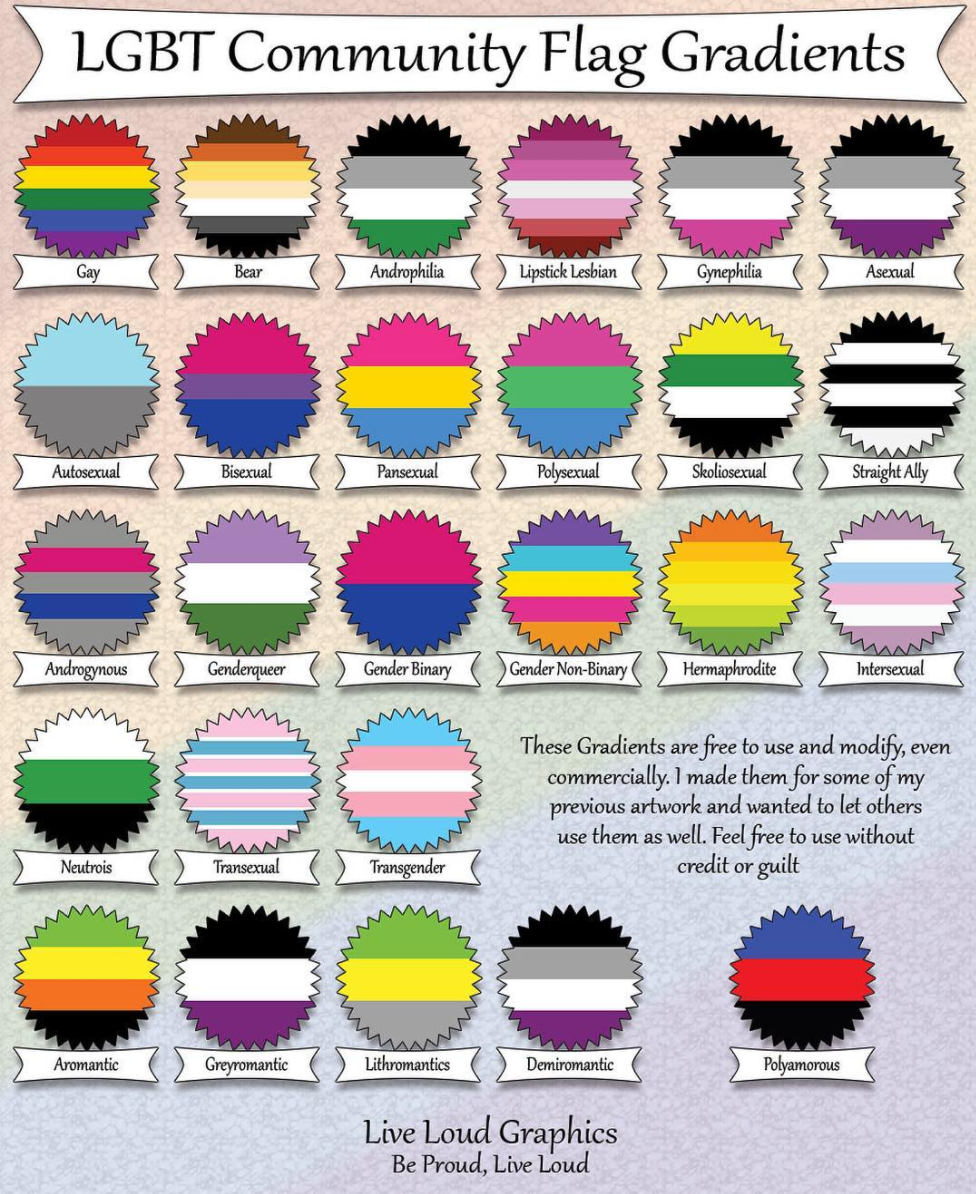 |
| The internet has given rise to many specific categories and names that can empower subcategories of the LGBTQ+ community. |
In a class discussion with peers, I began to understand language is not equipped for the variety of sexualities and identities that exist in today’s progressive LGBTQ+ community.
English in itself is very binary and unaccepting of people outside of heteronormative and cisnormative society. In the future, I hope to see less focus on labeling in the LGBTQ+
community and more focus on acceptance and understanding people for who they are outside of their sexual orientation and gender identity.
Personally, I have not found much comfort in labels on my sexuality, and though I have tried on a few different labels, I realized I like to define myself based on other parts of my life.
For example, I am an ambitious college student who likes to learn about people, and I am also in a very happy relationship with my girlfriend. Focusing on myself without worrying about a label has been very helpful to me.
I think our generation has made it past the need to be heard with labels and in the future I think people should work towards acceptance without labels; which could look like focusing on the relationships and presentations that make people feel happy in the moment.
I understand the benefit for many members of the LGBTQ+ community to identify with labels, but I think changing concrete labels from being the norm would be beneficial to many young people trying to understand themselves.
I have a very close relative who is sixteen and has been struggling with their gender identity for years now. They have love and acceptance from the family, and I think one of the hardest parts of this process has been the specific labels they see on the internet.
Specific identity labels seem very confusing for young minds and take away the focus on being comfortable as an individual and create pressure to find a label for the rest of the world. Switching the norm to focus on comfort beyond a label would be an effective
way to embrace a new generation of acceptance without anxiety around linguistic decisions. Creating a community of love and letting people be people seems like the best way to move forward.
I am only at the beginning of my consideration of this topic and through meeting other people in the LGBTQ+ community I hope to mold my views and understand other opinions and experiences.
There is no one way to be a person, and therefore no answer to whether labels are good or bad, their connotations vary among people. In the future of the LGBTQ+ community, it is my prediction that we will move past language and move towards acceptance,
love, and exploration. I hope to see this in the future, and I know I will continue to try to focus on people as individuals rather than labeling their gender or sexuality as part of a group.
References
“In the Spirit of Stonewall.” Trans Liberation: Beyond Pink and Blue, by Leslie Feinberg, Beacon Press, 1998, pp. 95–109.
Kadlec, Jeanna . “A Brief History of Queer Language before Queer Identity.” Literary Hub, 13 May 2019, lithub.com/a-brief-history-of-queer-language-before-queer-identity/.
Swartz, Anna. “LGBTQ Identity Is Shaped by Language. so What Words Will Describe ‘Queer’ in the Future?” Mic, Mic, 18 June 2018, www.mic.com/articles/189433/what-will-queer-language-look-like-in-2030-we-tried-to-find-out.



No comments:
Post a Comment