
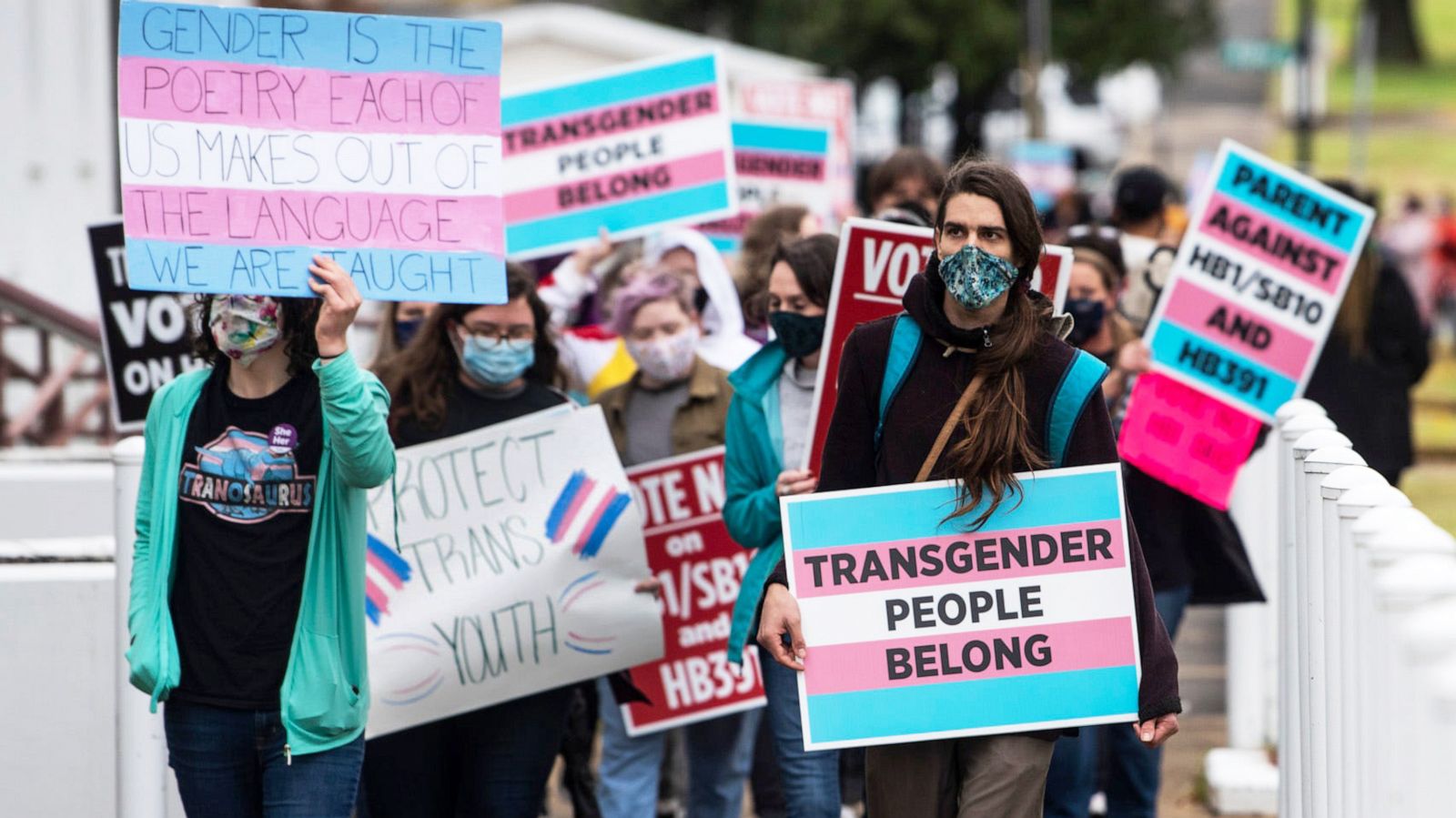
For generations, much of the population has tried dividing the world into two genders: male and female. This is the idealized, Platonic, biological world. The one where we as humans are divided into two kinds, creating a perfectly dimorphic species. We gender not only people, but things, practices, and ideas as well. However, it is the year 2021. The world is changing. In 2020, The Trevor Project found that 25% of LGBTQIA+ youth use pronouns that fall outside of the binary construction of gender (Hicks, 2020). How do we as a society understand gender inclusivity of ALL, and what actions can be taken to create a more inclusive and diverse world?
Knowledge is power. In the Youtube video titled, “Trans 101 - The Basics,” linked here, near the beginning, one of the speakers quotes that “we’re expected to act a certain way based on what’s between our legs.” This idea, however, ignores all of those who identify as trans and gender diverse. People tend to believe that our gender is what is decided at birth, however, this is actually our sex. Gender is used to discuss a range of identities that may not correspond to the established ideas of the established male and female system. Gender is a part of someone’s internal self, and can be classified as either male, female, both, or neither.

Somewhat recently, the Pride acronym has adopted more letters. Most sources now refer to it as LGBTQIA+, being an inclusive and accepting way to refer to those who do not identify as heterosexual or cisgender. One might ask themselves, what does the acronym LGBTQIA+ stand for? It stands for lesbian, gay, bisexual, transgender, queer, intersex, and asexual. While some of these words are discussed frequently, others may need some further explanation. Intersex is one of those terms, which is a term that is discussed so little, that when I was writing this blog, and I misspelled the term, there was NO option for a spelling correction. Chromosomes, hormones, the internal sex structures, the gonads and the external genitalia all vary more than most people realize (Fausto-Sterling, 2000). Those born outside of the Platonic dimorphic mold are called intersexuals (Fausto-Sterling, 2000). Fausto-Sterling found that, on the basis of evidence from an assessment done with undergraduate students from Brown University, found that for every 1,000 children born, seventeen are intersexual in some form. Another part of the acronym not discussed much is the + sign, including the many people who do not identify with any other part of the acronym, some of which are included in the link provided here.
Consider, for instance, the language we use on a daily basis and how that can be gendered. Is it sexist to say “you guys?” Why do we only have three ways to address a woman: Miss, Ms., and Mrs.? What do you do when someone switches their pronouns? When talking to people, especially people whom you may not know very well, it is important to use appropriate and inclusive language. For example, asking someone their preferred names and/or pronouns when introducing yourself instead of assuming. Accept that people’s names and pronouns may change over time. Another way to use language to create a more inclusive culture is by listening. Speaking is only part of the conversation, but listening is the other half. Make sure to listen to what others are saying, and understand where they are coming from. Respect them and their values.
Not only is it important to use a language that is inclusive, but it is also important to create a space
where everyone can feel comfortable. The first step in doing this is to not only educate yourself, but
educate others as well. Take the time upon yourself to actually read about terms you may not know or
understand. Next, everyone’s differences must be celebrated. This is one of the most important ways to
show people that you respect them, their backgrounds, and their traditions. You should invite them to
share those in the space to the extent to which they are comfortable. Finally, it is okay to ask questions.
This shows that you care and are paying attention to what the person has to say.

In order to create a more gender-inclusive society, action must be taken. Take this example, where a
lot of marketing is still very gendered. There are extreme cases, where items labeled specifically “for girls”
or “for women” use a lot of pink, or on the opposite side are labeled “for men” or “for boys.” If you have
ever walked in the toy section of your local Walmart or Target, it is very noticeable how gendered the toys
are by aisle. Toys meant for girls are in one aisle and toys meant for boys are down a different aisle.
Making marketing more gender-inclusive does not necessarily mean that companies have to take
cisgender men and women completely out of the picture. However, it does mean that companies need
to focus on the language in which they are using, the categories they divide their products into, and the
people represented on their websites/advertisements. One example of a company working towards
gender inclusion is Milk Makeup. They are selling a product generally seen as feminine in our culture.
However, the brand knows that their target audience is not only cisgender girls and women, and have
embraced this by representing a diverse group of people on their social media platforms as a mean of
promoting their products. Few brands are pulling this off, and in order to create a more gender inclusive
society, we must market towards everyone.
Being gender inclusive does not only mean to educate yourself and read a million articles and try to
become a professional on the topic. However, it does mean that we as a society must be more open to
new perspectives and ideas, listen carefully to others, and market towards everyone. In many ways, our
society is becoming more accepting and inclusive than it was generations ago, but we still have a lot of
work to do, which is why it is time to step up and take action.
References:
Fausto-Sterling, A. (2000). The Five Sexes, Revisited. The Sciences, 40(4), 18-23. https://doi.org/10.1002/j.2326-1951.2000.tb03504.x.
Gurchiek, K. (2018, March 19). 6 Steps for Building an Inclusive Workplace. Shrm.org. https://www.shrm.org/hr-today/news/hr-magazine/0418/pages/6-steps-for-buil ding-an-inclusive-workplace.aspx
Hicks, K. (2020, August 24). Beyond the Binary: Making Marketing Truly Gender Inclusive. Velocitize.com. https://velocitize.com/2020/08/24/beyond-the-binary-making -marketing-truly-gender-inclusive/
Mallinson, C., & Inscoe, J. (2020, May 29). What is Gender-Inclusive Language and why does it matter? Scholars.org. https://scholars.org/contribution/what-gender-inclusive-language -and-why-does-it



No comments:
Post a Comment